


Contents
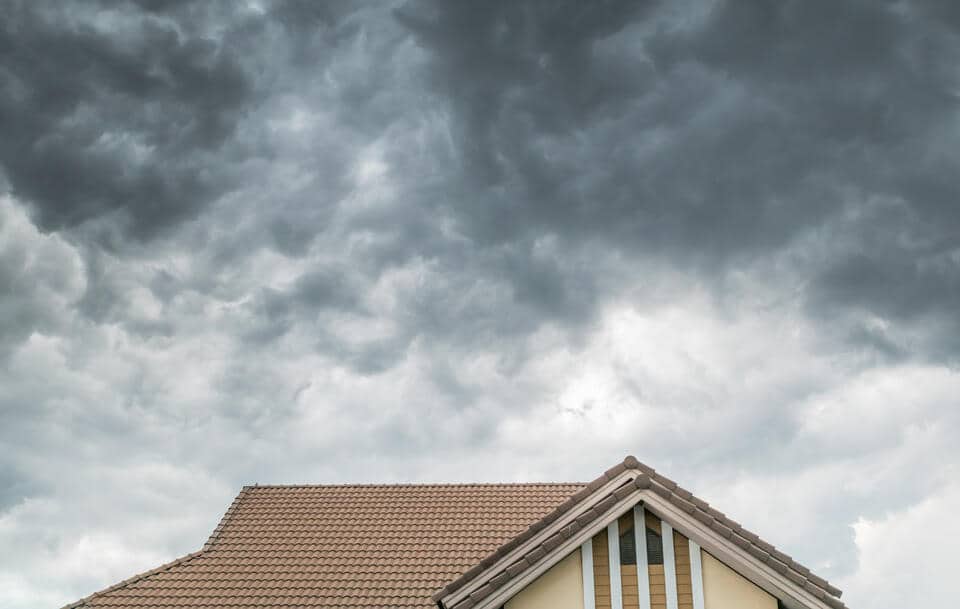
One of the most obvious signs of storm damage is visible damage to your roof, but it isn’t the only thing you should be looking for after bad weather. In this blog we’ll walk you through 5 signs your roof may need professional help!
5 Signs of Storm Damage
There are some signs of damage that can appear regardless of the roofing material you have. Most roofs, no matter their style, have the following features and are susceptible to leaks.
1. Dented Flashing and Gutters
When you hear roofers talk about flashing, they’re referring to any of the seams in your roof that are covered with sheet metal. This includes the edges of your roof as well as anywhere your roof meets your siding, a chimney or skylight, or another side of your roof.
If you’ve had a major storm recently that included high winds, heavy rain, hail, or snow and ice, dented flashing could be an unfortunate byproduct of the storm.
In addition to the dented areas of your flashing, keep an eye out for flashing that is missing, bent, or raised. Any of these issues left unresolved present prime opportunities for moisture to seep into your roof and wreak havoc on your home.
Your gutter system may also incur damage from hail impact or high winds. Look for areas where your gutters have become detached from one another or where they have dents or holes. Broken gutters may allow water to leak into your siding and the foundation of your home, so it’s best to get them repaired right away.
2. Roof Leaks
Even if there are no signs of visible damage to your flashing, your roof may become susceptible to water leaks in the aftermath of a major storm. Obvious signs of moisture penetration, such as leaks inside your home and dark spots on your walls and ceilings, are indications that you need to get your roof checked ASAP for storm damage.
If you see mildew growth on your roof, icicles hanging from the edges of your gutters, or water stains in your attic that have been there since before the storm, these could be signs that your moisture issue wasn’t caused by the severe storm, but may actually be a product of one of the following factors:
- Ice dams
- Old age
- Overhanging branches
No matter what, a professional roofing contractor will be able to provide a detailed roof inspection and help you identify the cause of your issue.
3. Bent, Torn, Dented, or Missing Shingles
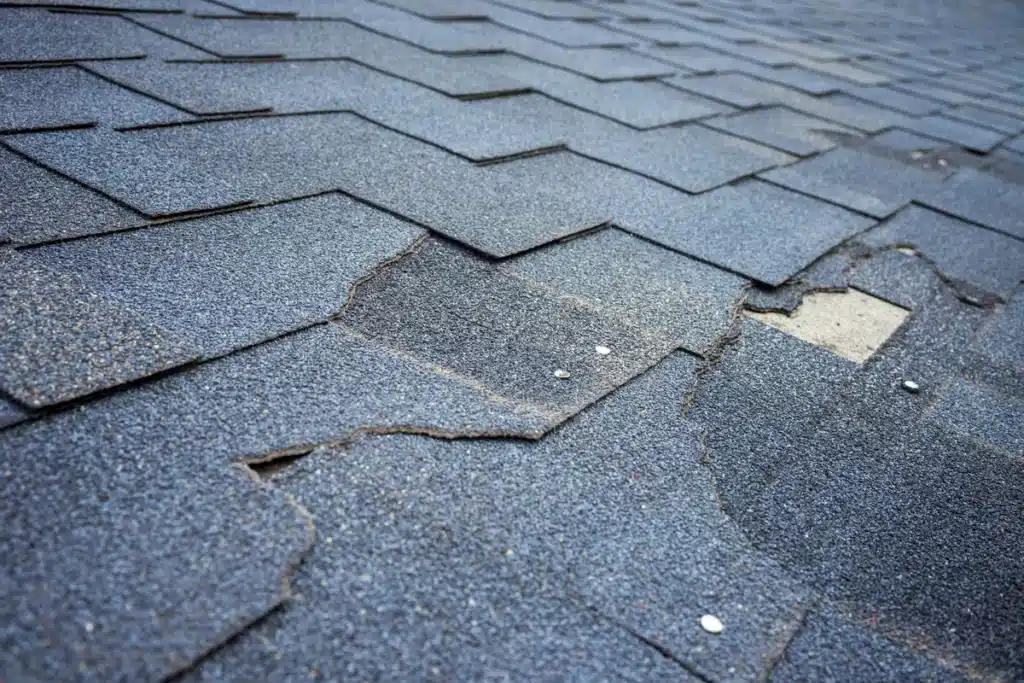
One of the more common signs of storm damage to your asphalt shingles will be torn or bent shingles. If you had high enough winds during your storm, you might even find that you have areas of your roof where the shingles have blown off completely.
You should be able to see these shingles from the ground and determine whether a roof repair or replacement will be the best course of action for you. Keep the following things in mind:
- The severity of the damage to your shingles
- How widespread the damage is
- The current age of your roof
Consult with a reputable roofing company to ensure that you’re making the best choice for you and your home.
Even if your shingles haven’t been completely torn, they may have been bruised or dented in the storm. Bruised shingles might have a dark spot in the middle of the shingle, and if it’s safe for you to get on your roof, they’ll probably feel soft to the touch.
4. Asphalt Granule Loss
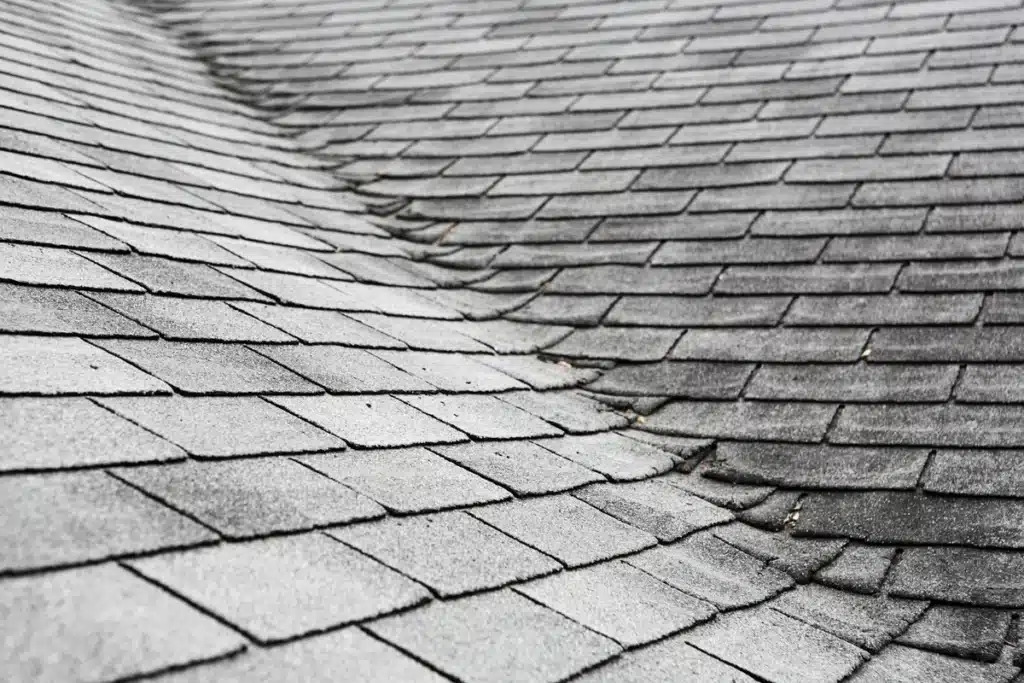
If there are no dark spots on your shingles or any obvious areas where your shingles are missing, you might think that your roof escaped the storm unscathed. However, you may miss subtle signs of storm damage, leaving you with a roof that provides less than ideal protection from the elements.
Thankfully, there is one subtle sign of shingle damage that even the untrained eye can’t miss: granule loss. In the days and weeks after the initial storm event, if you have clogged gutters or see asphalt granules washing through your gutter system, it’s a sure sign that trouble is on the horizon if you don’t take action.
These granules protect your shingles in a variety of ways:
- They wash away moisture from rain, snow, and sleet.
- They prevent dangerous mold growth.
- They keep the shingles underneath from prematurely aging due to the sun’s UV rays.
While asphalt granule loss may not initially seem like a big deal, you should get this checked out sooner rather than later to prevent further damage from being caused to your roof and home.
5. Denting
Hail damage can cause small dents across the surface of a metal roof. While this type of roof damage is usually only superficial in nature, it can look unsightly. If it bothers you, you might need to look into roof replacement in the near future.
Watch for These Signs of Storm Damage
Now you know the most common signs of storm damage on asphalt and metal roofs. Knowing how to identify roof damage is one of the best things you can do to preserve the health of your roof and understand when it’s time to get your roof serviced.
Whether you had extensive damage to your roof or are simply looking to prep for the next major storm, you deserve roof repair services that meet your needs at an affordable price. Here at SMR HomePros, we offer just that. Our family-owned company is your one-stop shop for a communicative team, swift service, and high-quality repairs.
Interested in working with us? Reach out today!